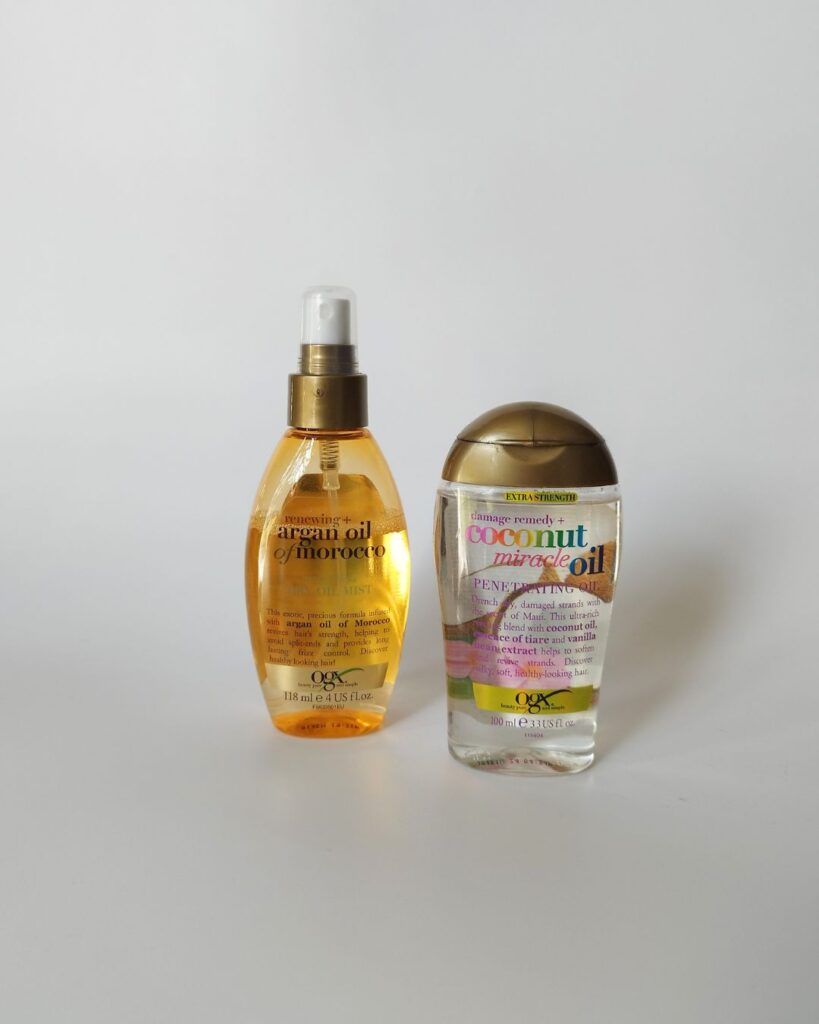
You’re standing in the hair aisle holding two OGX bottles. One says coconut. One says argan. They cost about the same. They’re both hair oils. And you have no idea which one is actually right for your hair.
(In fact, there are more than two bottles, but we’ll get to that).
This post may contain affiliate links, which means I’ll receive a commission if you purchase through my links, at no extra cost to you. Please read full disclosure for more information.
This happens to a lot of people. OGX makes some of the most popular drugstore hair oils out there, and the coconut and argan versions get lumped together like they’re the same product with different labels. They’re not. You know we love budget-friendly hair products over here, not just the salon stuff, so let’s explore these great options from OGX.
By the end of this, you’ll know which oil fits your hair type, what people mean when they call coconut oil “the science backed one,” and how to use either oil before you shampoo instead of just after (game changer). That last part is a small habit that a lot of people have started doing lately, and it changes how the oil actually works for you.
OGX Coconut Oil vs Argan Oil: What’s Actually Different
These two oils are not interchangeable, even though they sit next to each other on the shelf.
OGX’s coconut oil isn’t pure coconut oil straight from the jar. It’s a formulated blend, so it pours just fine and stays liquid in the bottle. But it’s still noticeably heavier and richer than the argan version. It’s the kind of oil that a lot of people reach for when their hair feels dry no matter how much product they use.
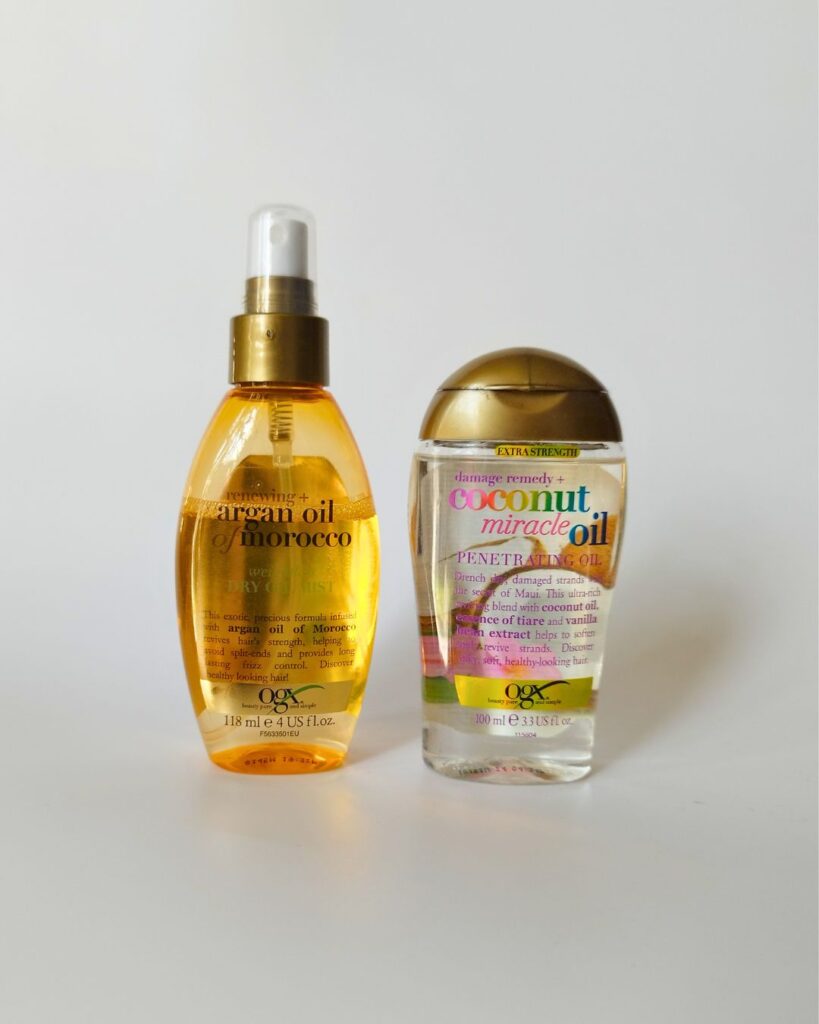
Argan oil is lighter by comparison. It soaks in fast and people often describe it as feeling almost weightless once it’s on.
Here’s a simple way to picture it. If your hair feels like it swallows product and still looks dry an hour later, that’s the thick, moisture hungry hair type coconut oil tends to suit. If a few drops of oil leave your hair looking greasy by lunchtime, you’re probably better off with something lighter like argan.
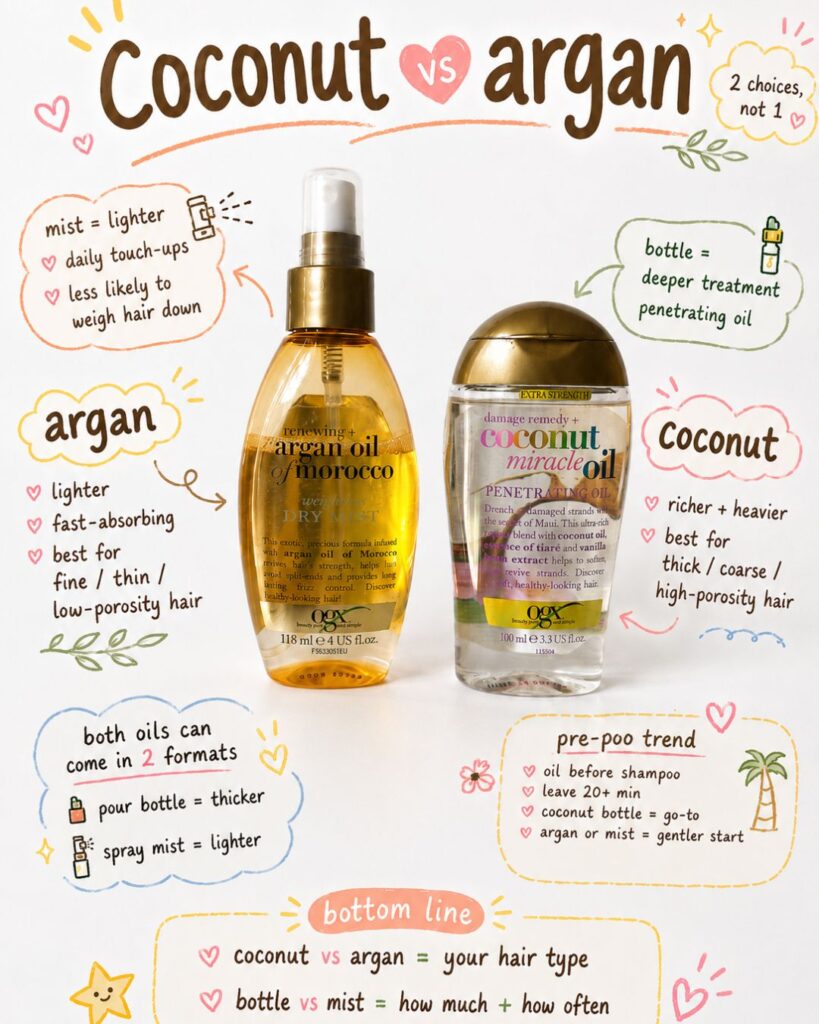
OGX itself breaks it down in a pretty simple way too. Their own guidance says argan oil tends to work best for dry, fine, or thin hair, while coconut oil is usually the better fit for medium to thick, dry, or high porosity hair. That’s a good starting point, but testing it on your own hair is, of course, the real test.
| Coconut Oil | Argan Oil | |
|---|---|---|
| Texture | Liquid, but heavier and richer | Light, liquid |
| Best for | Medium to thick, high porosity hair | Fine, thin, low porosity hair |
| Feel | Rich, more coating | Fast absorbing, barely there |
| Common use | Deep treatments, pre wash oiling | Everyday shine, frizz control |
Bottle or Mist? The Other Difference You Need to Know
Here’s the part that trips a lot of people up. Coconut and argan aren’t the only two options you’re choosing between. OGX actually sells each oil in two different formats, and picking the wrong one is often why people say an oil “weighed their hair down” when really it was just the wrong bottle for the job.
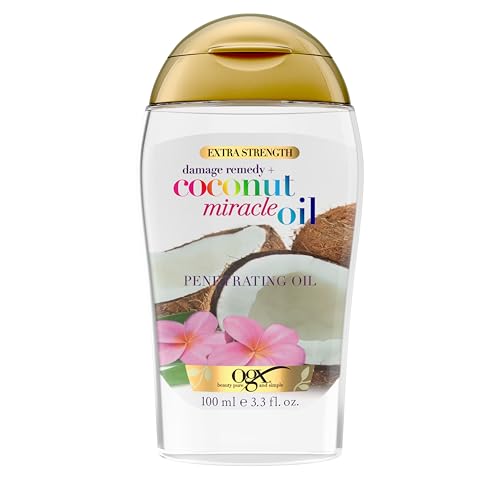
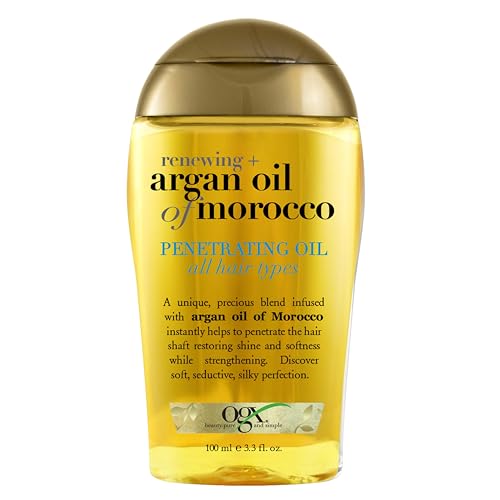
The first format is the classic penetrating oil. Think OGX Coconut Miracle Oil or OGX Renewing Argan Oil of Morocco, both sold in a simple pour bottle. These are thicker, more concentrated, and made for a deeper dose of moisture. A little goes further, but it’s also easier to use too much by accident.
The second format is the weightless mist or dry oil spray. Think OGX Nourishing Coconut Oil Weightless Hydrating Oil Hair Mist or OGX Renewing Argan Oil of Morocco Weightless Healing Dry Oil Spray. These come in spray bottles and go on much lighter, since the oil is thinned out with other ingredients so it spreads in a fine mist instead of a pour. They’re built for daily use, touch ups between washes, or for people who love the idea of oiling their hair but always felt weighed down by the pour bottle versions.

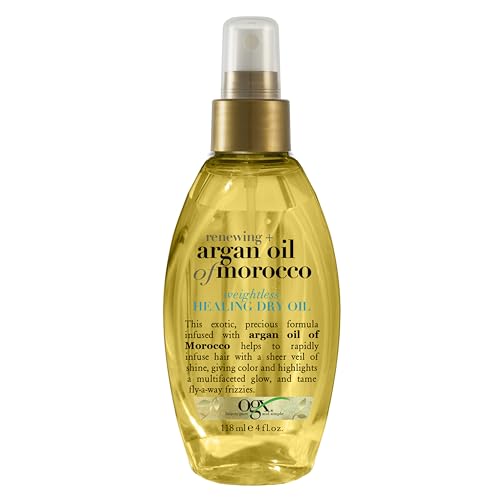
So really, you’re making two choices, not one. Coconut or argan is about your hair’s texture and moisture needs. Bottle or mist is about how much product you actually want to commit to, and how often you plan to use it. Someone with thick, dry hair might reach for the Coconut Miracle Oil pour bottle once or twice a week, then keep the argan mist on hand for a quick refresh in between.
Which OGX Oil Actually Fits Your Hair?
So which one is yours? Here’s a quick way to think about it.
If your hair is fine, thin, or straight, argan oil is usually the safer bet. A little goes a long way, and it’s less likely to leave you looking flat.
If your hair is thick, curly, coily, or feels rough and porous no matter what you do, coconut oil can handle being asked to do more work. It’s built for hair that eats through lighter products without much payoff.
If your hair is color treated or a bit heat damaged, either oil can work. Argan is the gentler pick if your ends already feel fragile, since it’s less likely to weigh things down further.
And if you’re dealing with an oily scalp but dry ends, which is honestly one of the most common hair complaints out there, the fix isn’t picking one oil over the other. It’s where you apply it. Keep either oil off your scalp and focus from mid length down to your ends.
A quick real world example. Someone with loose waves who slicks on coconut oil head to toe often ends up with that flat, wet look hair by the afternoon. Meanwhile, someone with coily hair who uses a few drops of argan oil might find it disappears without doing much at all. Matching the oil to your texture matters more than picking the “better” oil.
Does the Coconut Oil Hype Actually Hold Up?
You’ve probably seen someone in a comment section say coconut oil is scientifically better for hair. Here’s what that’s usually based on.
There’s an older study that gets brought up constantly in hair care circles. It compared coconut oil to a couple of other oils and looked at how much protein hair lost after washing. That research found coconut oil held up better at limiting protein loss compared to the other oils tested, and researchers linked this to how well it seems to soak into the hair strand itself.
That’s interesting, but keep some perspective here. It’s one older study done in lab conditions, not a guarantee about what will happen on your actual wash day. A lot of people online treat this study like it’s the final word, when really it’s just one piece of evidence that a certain kind of oil behaves a certain way under test conditions.
Argan oil doesn’t really have an equivalent viral study. Its reputation is built more on how it feels and smells than on any specific research people quote. That doesn’t make it worse. It just means people’s love for it comes from experience, not a headline.
The honest takeaway is this. Some research points toward coconut oil being a bit better at holding onto hair’s natural protein. But plenty of people with fine hair still swear by argan oil because it simply feels better on their strands. Both things can be true at once.
Why Oiling Your Hair Before You Shampoo Is Catching On
Most people only think to use hair oil after they shower, as a finishing touch. But a growing number of people are doing it the other way around, oiling their hair before they wash it, not after.
This is often called a pre-shampoo treatment, or pre-poo for short. You apply oil to dry or slightly damp hair, let it sit for at least 20 minutes, and then shampoo like normal.
The idea behind it is pretty simple. Shampoo is designed to strip away oil and buildup, and in the process it can also strip away some of the natural protection your hair had going in. A lot of people believe that adding a layer of oil first acts like a light buffer. It’s not doing anything magical. It’s more like giving your hair a bit of a cushion before it goes through the friction of washing and detangling.
This is also one of the reasons Abbey Yung has become such a go to name in hair care content. She’s one of the most followed voices online when it comes to hair routines, and a lot of people trust her recommendations. One of her go to steps on wash day is oiling her hair with OGX coconut oil before she shampoos. You can see how she talks about it and the products she reaches for on her TikTok, without needing to follow every single step of her full routine to borrow this one idea.
A word of caution here too. This step isn’t for everyone. If your hair is already fine or gets weighed down easily, a heavy pre-poo oil might leave it looking greasy even after a full wash. Start light, see how your hair responds, and adjust from there.
Coconut or Argan for Pre-Shampoo? Here’s How to Decide
If you’re going to try oiling before you shampoo, which oil should you actually reach for?
Coconut oil tends to be the go to for this step, especially for thicker or coarser hair. It’s rich enough to sit under a shower cap or just untouched for 20 minutes or more without your hair looking limp once it’s washed out. This is part of why it shows up so often in pre-shampoo routines.
Argan oil works better here if your hair is fine or on the drier, more fragile side but still gets weighed down easily. It’s a gentler way to test out the pre-poo idea without committing to a heavier product right away.
Format matters here too. For this step, the pour bottle penetrating oils are generally the better pick over the weightless mist versions. You need a bit more product sitting on your hair for the full 20 minutes to do anything, and a light mist tends to just get absorbed or evaporate before it has much time to work. If you have fine hair and are nervous about using too much, start with just a few drops of the mist instead of skipping the step altogether, then work your way up to the pour bottle if your hair can handle it.
If you have color treated hair, either oil can work for this step. Just keep an eye on how long you leave it on. Oil left on too long can sometimes leave color treated strands feeling a bit slippery or soft, so 20 to 30 minutes is usually plenty rather than going overnight every single time.
A simple way to test it. Apply a small amount to your mid lengths and ends only, avoid your scalp, and set a timer for 20 minutes. Wash as usual afterward, twice if your hair still feels coated. See how your hair feels the next day before deciding if this becomes a regular step.
The Bottom Line
Coconut oil and argan oil aren’t competing for the same job. Coconut oil tends to suit thicker, drier, more porous hair, and it holds up well as a heavier pre-shampoo treatment. Argan oil suits finer or more delicate hair, and works well as a light everyday oil or a gentler pre-poo option.
On top of that, remember you’re picking a format too. The pour bottle penetrating oils are for a deeper, more deliberate treatment. The weightless mists are for lighter, more frequent use. Getting the format right matters just as much as picking coconut or argan.
Neither oil is objectively better, and neither format is either. It really comes down to your hair’s texture and how it tends to behave.
If you already own one of these OGX oils, try using it before your next shampoo instead of only after. Give it 20 minutes, wash as usual, and see how your hair feels the next day. That one small change is often where the real difference between OGX coconut oil and argan oil actually shows up.