Walk down any hair aisle and you will see the same two words over and over: bond repair. It is on drugstore shelves. It is on salon shelves. It is all over your social media feed too. But here is the problem. Nobody explains what makes one bond repair treatment different from another. You just see big claims and a high price tag, and you are left guessing.
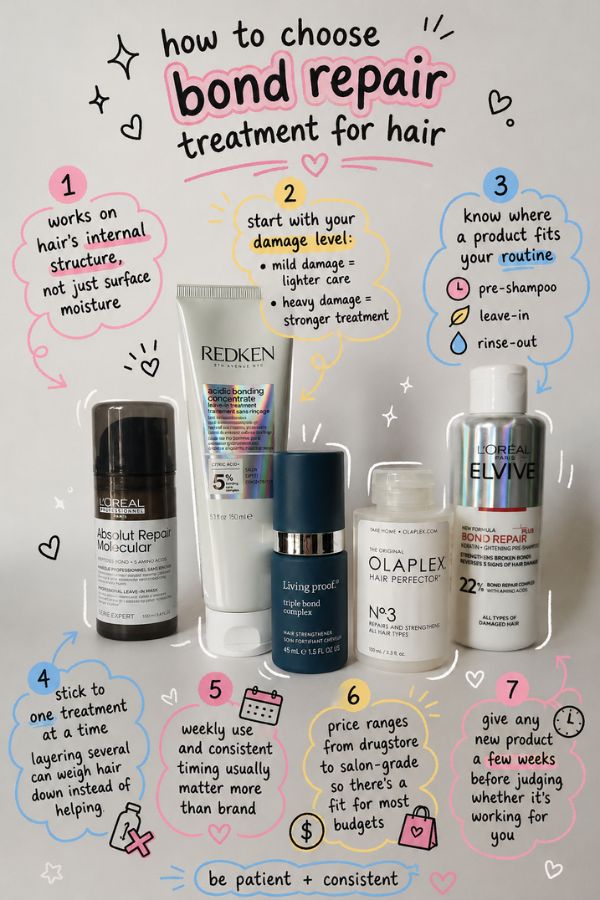
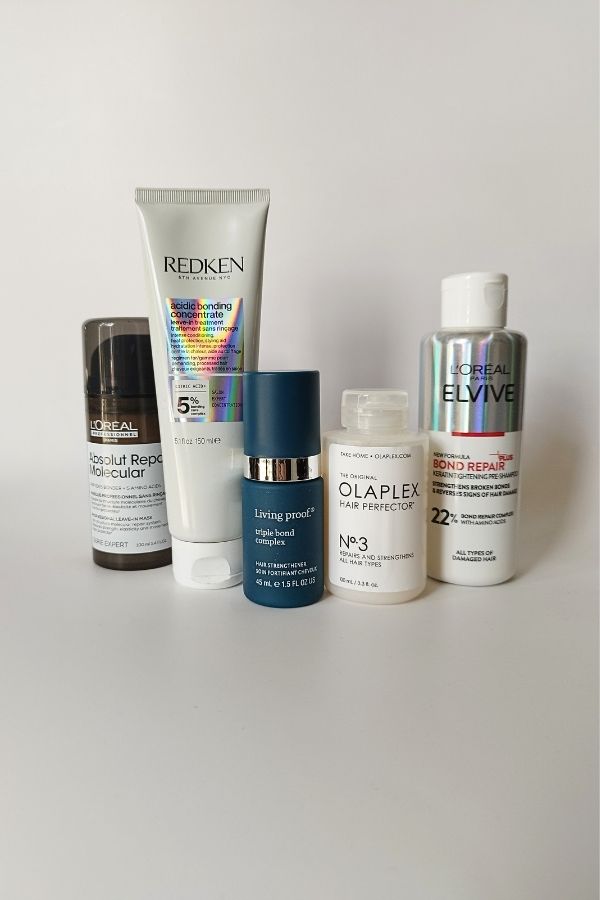
That guessing game gets expensive fast, especially if you end up buying three products that do the same job. This guide explains HOW to actually choose product for your hair, plus it breaks down five of some of the most talked about bond repair treatments for hair right now: Olaplex No.3, Redken Acidic Bonding Concentrate leave in treatment, Living Proof Triple Bond Complex, L’Oreal Professionnel Absolut Repair Molecular leave in mask, and L’Oreal Elvive Bond Repair pre shampoo treatment.
This post may contain affiliate links, which means I’ll receive a commission if you purchase through my links, at no extra cost to you. Please read full disclosure for more information.
By the end, you will know which one fits your hair, your habits, and your wallet.
What Does a Bond Repair Treatment for Hair Actually Do?
Your hair is held together by tiny bonds you cannot see. Heat tools, hair color, and bleach can break some of those bonds over time. That is the basic idea behind almost every bond repair treatment for hair on the market today.
Think of it like a cracked wall. A regular conditioner is like a fresh coat of paint. It covers the crack and makes things look smooth on the surface. A bond repair treatment is supposed to work more like a patch underneath that paint. It targets the structure, not just the shine.
Here is the part that trips people up. Bond repair is not one single technology. Each brand uses its own approach. Some use a specific bonding ingredient. Others lean on acids to balance your hair’s pH level. Others use amino acids or peptides. That is why two bond repair products can promise similar things but feel completely different once you actually use them.
It also helps to know where a product fits into your routine. A pre shampoo treatment goes on before you wash. A leave in treatment goes on after you wash, and you do not rinse it out. A rinse out treatment gets washed away before you condition. Mixing these up is one of the easiest ways to waste a good product.
A lot of beauty editors who have tested these treatments side by side describe bond builders as working best on hair that already has damage. They are not really made to add moisture the same way a hydrating mask does. So if your hair just feels dry, a bond treatment might not be your first move.
Match Your Hair Damage to the Right Bond Repair Treatment
Before you compare products, it helps to know how much damage you are actually working with. Not every head of hair needs the same level of repair.
Here is a simple check a lot of people use at home. Take a strand of wet hair and gently stretch it. Healthy hair tends to stretch a little and bounce back. Damaged hair often feels stiff, or it may snap instead of stretching. This is not a lab test. It is just a quick way to get a feel for where your hair stands.

Here is a quick way to sort yourself into one of three groups:
- Mild damage: You deal with some heat styling and maybe a color appointment now and then. A lighter leave in step or a pre shampoo treatment is usually enough.
- Moderate damage: You color your hair often or use hot tools most days. A weekly leave in mask layered under your regular conditioner tends to make more sense here.
- Heavy damage: Your hair has been through a lot. Maybe you have lightened it several times, or you notice real breakage, not just frizz. This is where the stronger, more concentrated treatments tend to earn their higher price.
Be honest with yourself here. If your ends still feel like the same healthy hair you had two color appointments ago, you likely do not need a four step system. You need one good product, used the right way.
Bond Repair Treatment for Hair: Comparing 5 Popular Products
These five products come up again and again in bond repair conversations. Here is how they actually differ, once you look past the marketing.
| Product | Routine Step | Best For |
|---|---|---|
| Olaplex No.3 Hair Perfector | Rinse out, used before shampoo | Heavy bleach or chemical damage |
| Redken Acidic Bonding Concentrate Leave In | Leave in, applied to towel dried hair | Fast, soft, smooth results |
| Living Proof Triple Bond Complex | Weekly leave in, needs heat to fully work | People who blow dry regularly |
| L’Oreal Professionnel Absolut Repair Molecular Leave In Mask | Leave in, last step of a full salon system | People wanting a full salon routine |
| L’Oreal Elvive Bond Repair Pre Shampoo Treatment | Pre shampoo, used before you wash | Budget minded first timers |
Olaplex No.3 Hair Perfector is a rinse out treatment. You apply it before you shampoo, kind of like a pre shampoo step. Olaplex was one of the first brands to build its whole reputation around bond repair, and it still gets recommended often for hair that has been through heavy bleaching or chemical treatments. Results tend to build up slowly with regular use rather than showing up right away.
Redken Acidic Bonding Concentrate Leave In Treatment is a leave in step, applied to towel dried hair. Instead of the same bonding ingredient Olaplex uses, Redken leans on an acidic system built around citric acid. A lot of people who try it say their hair feels softer and smoother almost right away, which is a different experience than the slower buildup you get with Olaplex.
People who have put Redken’s leave in and Olaplex No.3 through a real side by side test tend to agree the two take different paths to a similar goal. Olaplex focuses on a specific bonding ingredient built for deep repair. Redken focuses on an acidic, balanced approach that tends to deliver a softer feel faster. Neither one is flatly better. It depends on what your hair actually needs.
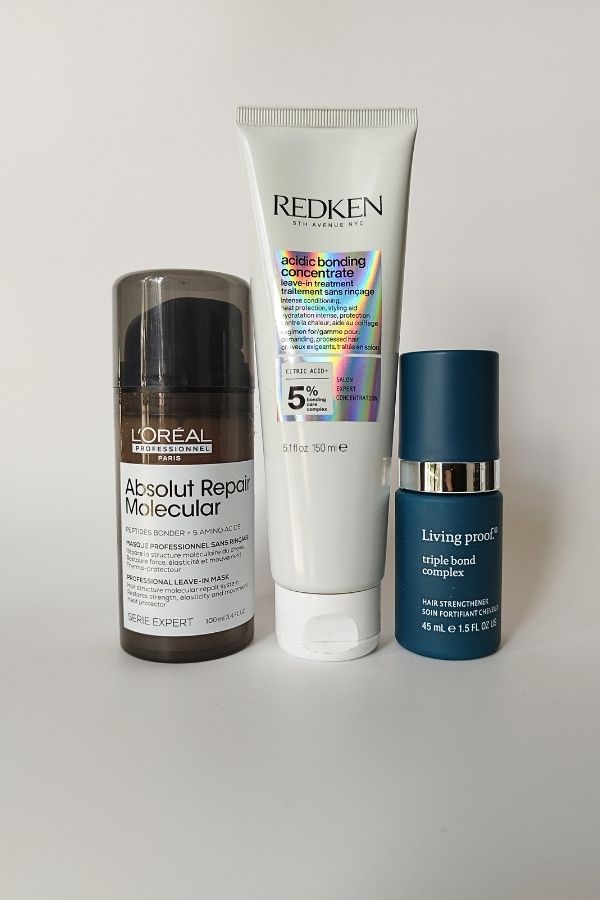
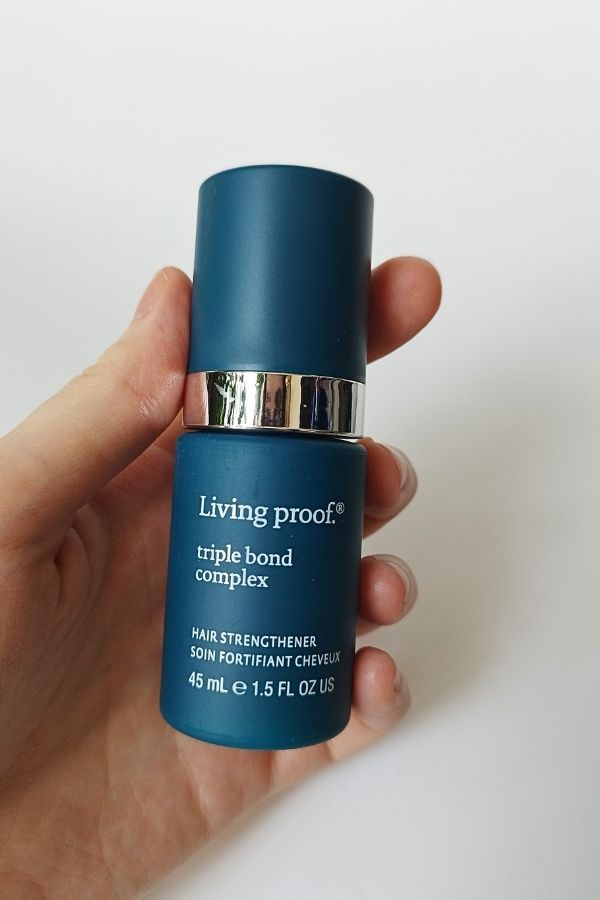
Living Proof Triple Bond Complex is a weekly leave in treatment, and it works a bit differently than the others on this list. It needs heat to fully activate, so you have to blow dry your hair after applying it to get the full effect. If you air dry most days, keep that in mind. Living Proof says its formula is built to work on all three bond types in hair, not just one, which is part of how the brand explains its approach as different from single bond competitors. It is sulfate free, silicone free, and paraben free, which matters to some shoppers.
L’Oreal Professionnel Absolut Repair Molecular Leave In Mask is a salon grade product, and it is really meant to be the last step in a full system, alongside a matching shampoo and serum. It uses a mix of amino acids and a bonding ingredient, and the texture is richer and heavier than the other leave ins on this list. It also costs more, and part of that price covers the full multi product system, not just this one mask. If you only buy the mask and skip the rest of the line, you may not get the full experience the brand builds it for.
L’Oreal Elvive Bond Repair Pre Shampoo Treatment is the most budget friendly option here, and it lives at the drugstore instead of the salon counter. It is a pre shampoo step built around a citric acid formula, so you apply it before you wash. It is a solid starting point if you are curious about bond repair but do not want to spend a lot to test the idea out. Many people use it as a gateway before deciding whether to invest in a pricier product.
How to Use a Bond Repair Treatment for Hair the Right Way
The number one way people waste money on bond repair is layering too many products in one wash day. Using a pre shampoo treatment, then a leave in, then a heat activated treatment all at once will not triple your results. It usually just leaves your hair feeling coated and heavy.
A few rules of thumb keep this simple:
- Stick to a weekly rhythm. Most leave in bond treatments, including Redken’s, Living Proof’s, and L’Oreal Professionnel’s, are meant for once a week use. Daily use can weigh down fine hair instead of helping it.
- Know your timing. Pre shampoo treatments like Olaplex No.3 and the L’Oreal Elvive treatment go on before you wash. Leave in treatments go on after you wash and stay in your hair.
- Blow dry if the formula asks for it. Living Proof’s treatment needs heat to fully activate. Skipping the blow dryer means you only get part of what the product offers.
- Give it real time. Many people say it takes several weeks of steady use before they can tell if something is working. One wash rarely tells the whole story.
Drugstore vs Salon Bond Repair Treatments: What Is Worth the Splurge?
Let’s talk about price, because that is usually what tips the decision.
Drugstore options like the L’Oreal Elvive pre shampoo treatment are a reasonable place to start, especially if your damage is mild to moderate or you just want to test the idea before spending more.
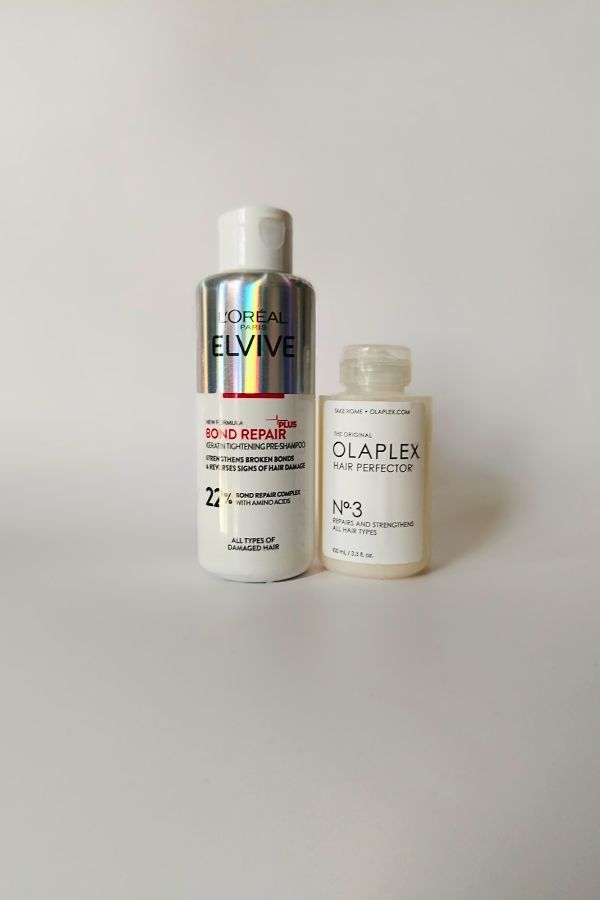
Mid range and salon leave ins like Olaplex No.3, Redken’s Acidic Bonding Concentrate, and Living Proof’s Triple Bond Complex sit in a similar price range. The difference between them comes down to the technology and how your hair feels afterward, not a real quality gap.
Higher-end options like K18 cost more because you are paying for concentrated technology in a small bottle, not a bundle of separate products. If you compare the price per ounce against a leave in from another brand, K18 can look expensive at first glance. But it is built to work in one fast step, with no shampoo or serum required alongside it, so a little goes a long way and you are not buying multiple bottles just to get results.
A smart way to shop this category is to start small. Try one product that matches your damage level. Give it a few weeks. Then decide if you want to upgrade to something stronger.
So, Which Bond Repair Treatment Is Right for You?
There is no single best bond repair treatment for hair. The right pick depends on how much damage your hair has, where it fits into your routine, and how much you want to spend.
If you have heavy damage, Olaplex No.3 remains a common go to. If you want a softer feel fast, Redken’s leave in is worth a look. If you already blow dry often, Living Proof’s heat activated formula could fit right in. If you want a full salon experience, L’Oreal Professionnel’s system is built for that. And if you just want to dip a toe in, L’Oreal Elvive’s pre shampoo treatment is an easy, low cost place to start.
Pick one. Use it the way it is meant to be used. Give it a few weeks before you judge it. That is really all a good bond repair treatment for hair asks of you.