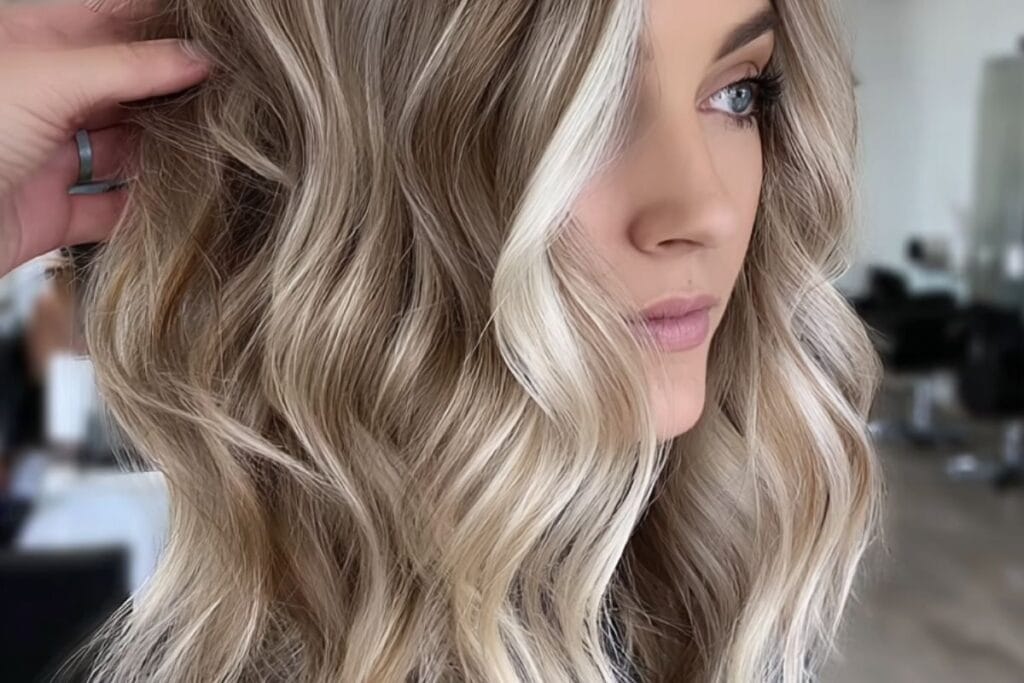
Your best hair day usually isn’t wash day. It’s day two or three. But only if you know what to do with the time in between.
Maybe you wash your hair every day because you’re not sure what else to do. Or maybe you skip washes but end up with flat, greasy roots by the afternoon. Either way, there’s a fix. Taking care of your hair between washes isn’t about doing more.
This post may contain affiliate links, which means I’ll receive a commission if you purchase through my links, at no extra cost to you. Please read full disclosure for more information.
It’s about doing a few small things at the right time. In this guide, you’ll learn how often to actually wash your hair, how to protect it while you sleep, how to deal with oily roots, and how to style hair that’s a day or two old. None of it takes much time. And once you get the hang of it, it becomes second nature.
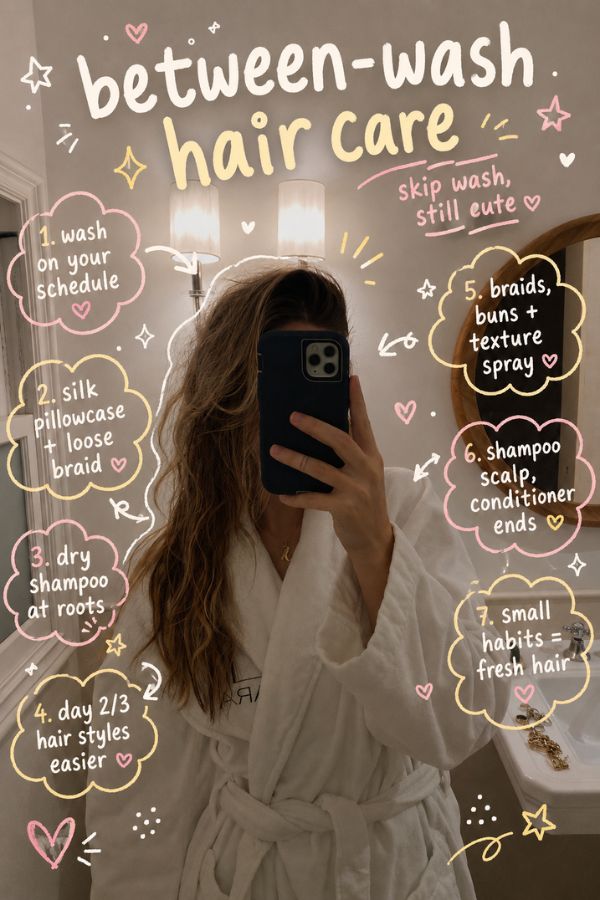
How Often Should You Really Wash Your Hair?
There’s no single right answer here. It depends on your hair type, how oily your scalp gets, how active you are, and even your age. Straight, fine hair tends to get oily fast, because oil travels down the hair shaft easily. Curly and coily hair holds on to moisture longer, so it can often go many more days without a wash.
As a starting point, dermatologists commonly point to washing every two to three days as a reasonable rhythm for most people. That’s not a rule. It’s just a place to begin testing from.

Here’s why it matters. Washing too often can strip your scalp of natural oils. That can leave hair dry and brittle over time. Washing too little can let oil, sweat, and product build up, which sometimes leads to itching or flaking. The goal is finding the middle ground that works for your hair, not someone else’s.
Quick check: if your roots look noticeably shinier by the second morning, you’re probably a two-day washer. If day three still looks fine, you can likely stretch further.
Protect Your Hair While You Sleep
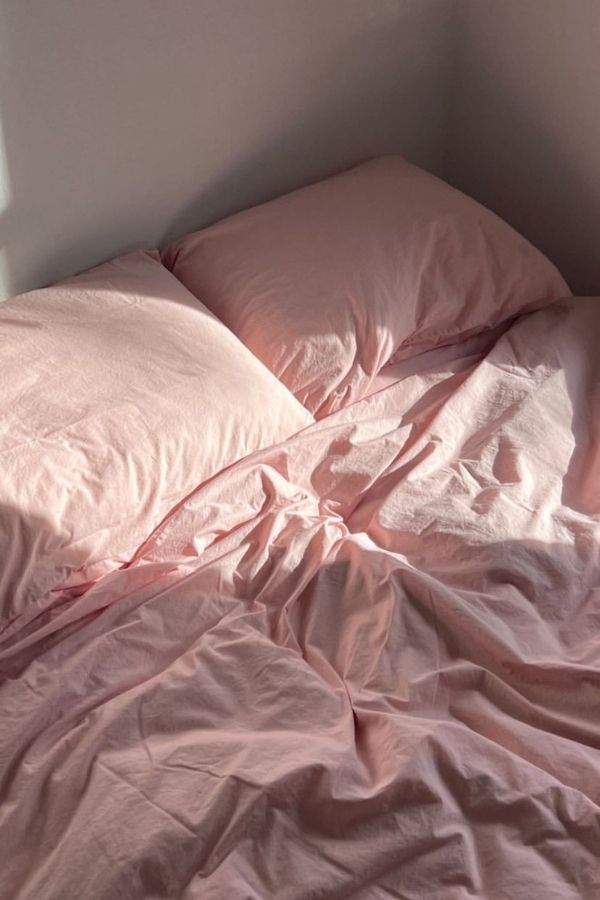
A lot of hair damage happens at night, not during the day. Cotton pillowcases are rough at a small scale, even if they feel soft to your hand. That roughness rubs against your hair for hours while you toss and turn. Over time, this is often linked to tangles, frizz, and breakage.
This is why so many people switch to a silk or satin pillowcase, or wrap their hair in a silk scarf or bonnet before bed. Some early research suggests silk may create less friction than cotton, though the people who ran that research are honest that the evidence is still far from settled. Either way, it’s a low-risk swap that a lot of people say makes their mornings easier.
You can try a silk pillowcase and see how your hair feels, a lot of people say they really notice the difference in smoothness and fewer flyaways in the mornings. I use these:

A few other easy habits help too:
- Loosely braid your hair before bed instead of leaving it fully loose
- Use a soft scrunchie instead of a tight elastic, which can leave creases or cause breakage
- Never go to sleep with soaking wet hair. It’s more fragile when wet, and friction against a pillow can cause more damage
Sleep protection is passive. You set it up once and it works while you rest. The next piece takes a little more effort during the day.
How to Refresh Your Scalp Without Washing
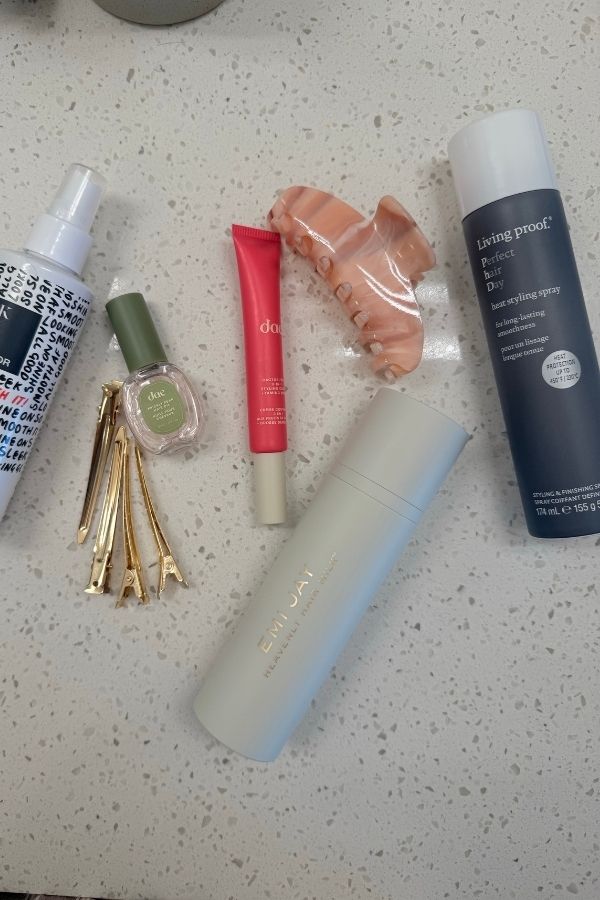
Oily roots are the number one reason people give up on stretching their wash days. The good news is you don’t need water and shampoo to deal with it.
Dry shampoo is the main tool here. Spray it at your roots, focusing on the oiliest spots, usually near your part and hairline. Give it a minute to absorb, then massage it in with your fingers or brush it through. Try not to use it more than once or twice between washes. Using it too often can cause its own kind of buildup.
I’m personally a fan of Living Proof dry shampoo and have been for years. It’s this one if you want to give it a go:
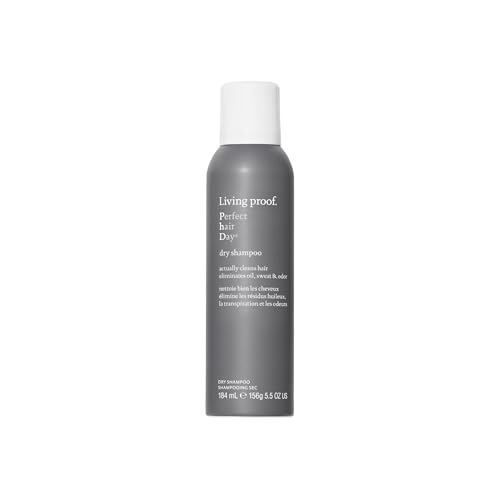
A lot of people who’ve dialed in their routine swear by applying dry shampoo the night before instead of the morning of. That gives it time to soak up oil while you sleep, so you wake up with less visible residue and fuller roots.
A few other ways to manage oil without washing:
- Brush your hair from root to tip with a boar-bristle or paddle brush. This helps spread natural oil down the hair instead of letting it sit at the scalp
- Try a scalp-only rinse with just water if you want something in between dry shampoo and a full wash
- Keep your hands out of your hair during the day. Oils from your fingers transfer to your strands and speed up greasiness
Think of it like this: it’s the same idea as blotting oily skin with a piece of paper. You’re not deep cleaning. You’re just managing what’s already there until your next real wash.
Easy Styles for Second-Day and Third-Day Hair
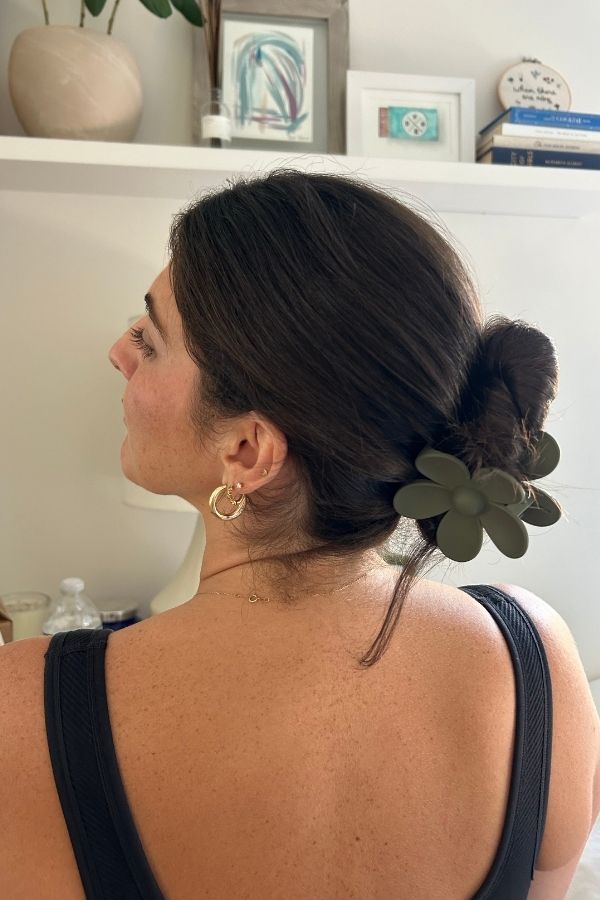
Here’s something that surprises a lot of people. Hair that’s a day or two old often holds a style better than freshly washed hair. Clean hair can be too soft and slippery to hold a curl, a braid, or volume. A little natural texture actually gives styles something to grip.
Some easy options for days you’re not washing:
- Braids. French, Dutch, or fishtail braids hide oily roots and add texture at the same time
- High ponytails or buns. Pulling hair up and away from your face is one of the fastest ways to hide greasy roots
- Headbands and claw clips. These cover the roots without much effort at all
- Texturizing or sea salt spray. This adds grip and volume, which helps disguise limp or flat hair
None of these require much skill. Most take less than five minutes once you’ve practiced a couple times.
Set Up Your Next Wash Day for Success
How you wash your hair also affects how long it stays fresh afterward. A few small habits on wash day can buy you extra days before your hair starts looking oily again.
Apply shampoo mainly to your scalp, not the length of your hair. Your scalp is where oil and buildup actually collect. Then apply conditioner mainly from the middle of your hair down to the ends. Putting conditioner near your roots can weigh hair down and speed up how fast it looks greasy.
A few more habits worth building in:
- Rinse with lukewarm or cool water at the end. Many people find this helps hair look smoother and shinier
- Go easy on heavy styling products right after washing. Too much product can flatten hair and shorten how long it stays fresh
- Use a clarifying shampoo every couple of weeks to clear out buildup from other products
- Blot your hair dry with a microfiber towel or an old t-shirt instead of rubbing it with a regular towel. This is often said to cause less frizz and breakage
Get this part right, and the days in between take care of themselves a lot more easily.
Here’s the Rundown
Taking care of your hair between washes really comes down to four things. Find a wash schedule that fits your hair, not someone else’s. Protect your hair while you sleep.
Manage oil with light tools like dry shampoo instead of reaching for the shampoo bottle every day. And use the days in between to try styles that are actually easier on day two or three hair.
You don’t need to do everything on this list at once. Pick two or three tips, try them for a couple of weeks, and see how your hair responds. It’s your hair, so trust what you see in the mirror over any general rule.
Once you find your rhythm for taking care of your hair between washes, it stops feeling like a chore and starts feeling automatic.