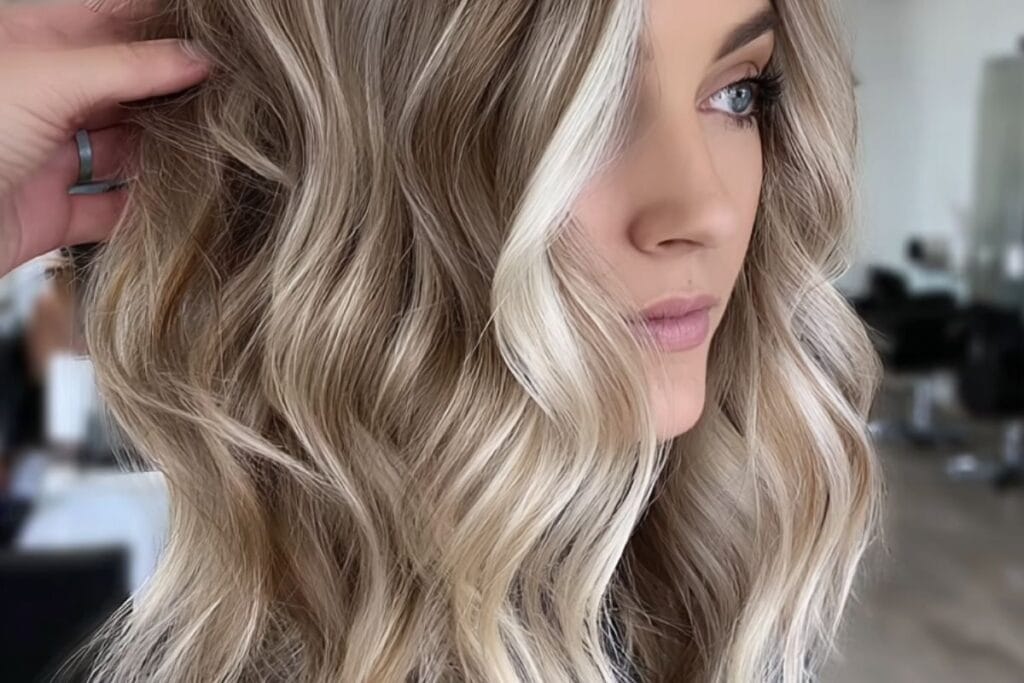
Fine hair gets a bad reputation. A lot of clients come to my chair convinced their hair is hopeless, flat and boring no matter what they do.
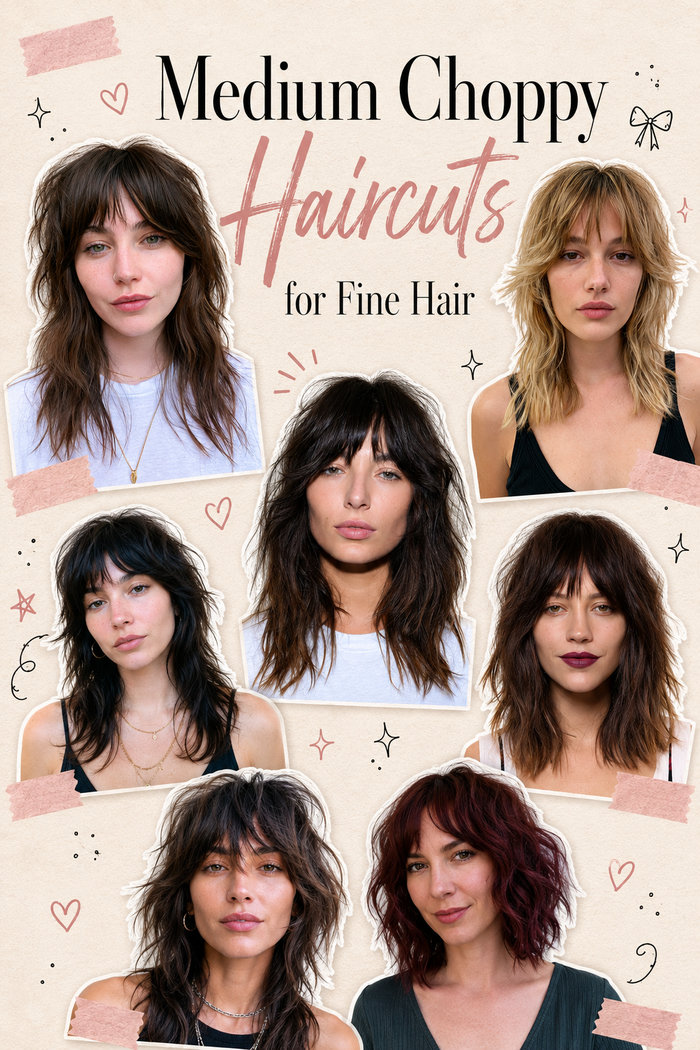
After working with fine hair for years I can tell you the cut is almost always the problem, not the hair.
Choppy Fine Hair Trends
Choppy cuts and fine hair are a genuinely great pairing – the texture and movement created by a well-executed choppy cut does more for fine hair than almost any product or styling trick. Here’s what’s trending and what to know before booking.
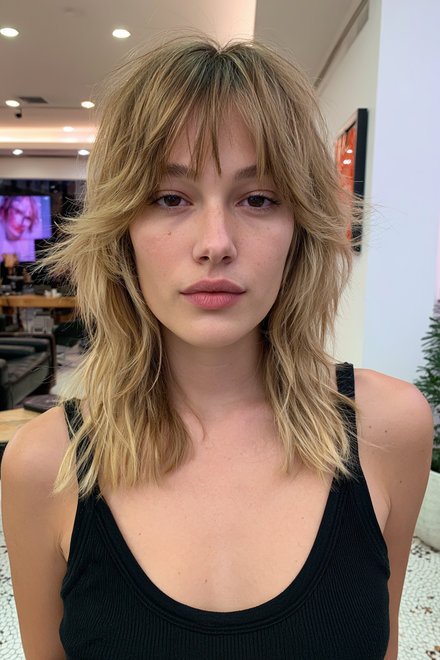
- Choppy lob – collarbone length with lots of point-cut texture through the ends, light and full of movement
- Textured collarbone cut with curtain bangs – face-framing bangs paired with a choppy mid-length, flattering and very current
- Shaggy mid-length – relaxed, undone layers with a lived-in finish that works especially well on naturally wavy fine hair
- Choppy butterfly cut – dramatic face-framing layers with lots of internal texture, adds serious volume through the crown
- Piece-y layered lob – soft, separated layers that move independently rather than sitting as one heavy mass
- Choppy wolf cut at medium length – voluminous through the crown with curtain bangs and lots of texture, one of the best styles for adding body to fine hair
Why Choppy Works So Well on Fine Hair
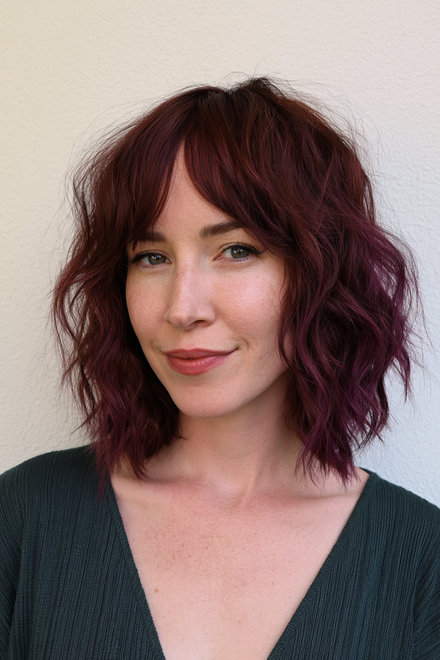
A blunt or one-length medium cut on fine hair almost always falls flat – literally. Without texture and internal layering, fine hair at medium length has nothing to hold onto and simply lies against the head with very little movement or shape. Choppy cutting changes that entirely.
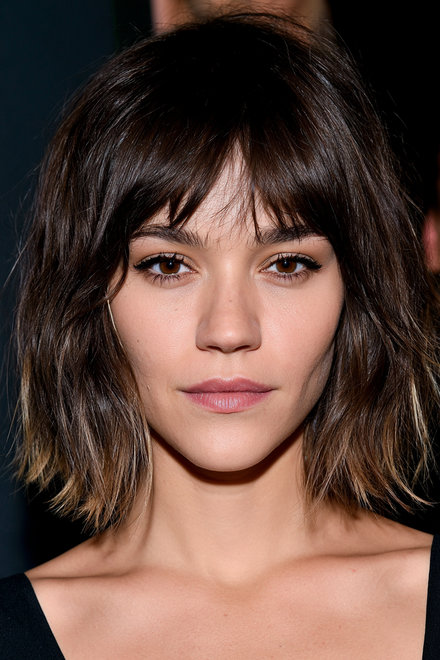
Point cutting and razor cutting are the two techniques that create the best choppy texture on fine hair. Both methods break up the ends rather than cutting them bluntly, which means the hair moves, separates, and catches light in a way that reads as fuller and thicker than it actually is. Asking your stylist specifically for point-cut ends and internal layers rather than just layers makes the intention clear and usually gets a much more precise result.
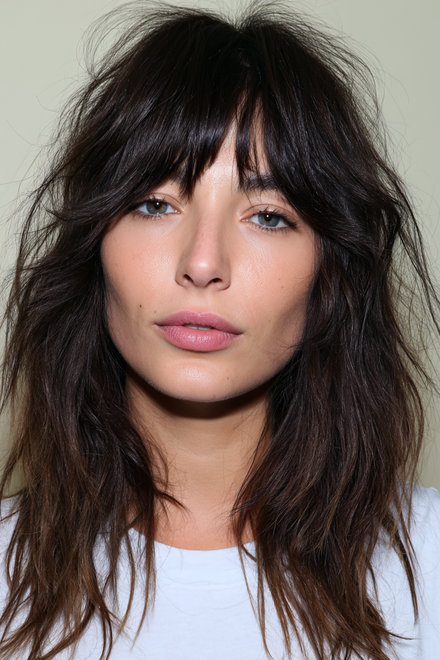
One thing worth keeping in mind – too many layers on very fine hair can sometimes backfire, leaving the ends looking wispy and thin rather than textured and full. The goal is strategic layering that removes weight from the right places while keeping enough density through the lengths to avoid that scraggly, over-layered look. A skilled stylist will always balance the two.
What’s Trending on Socials
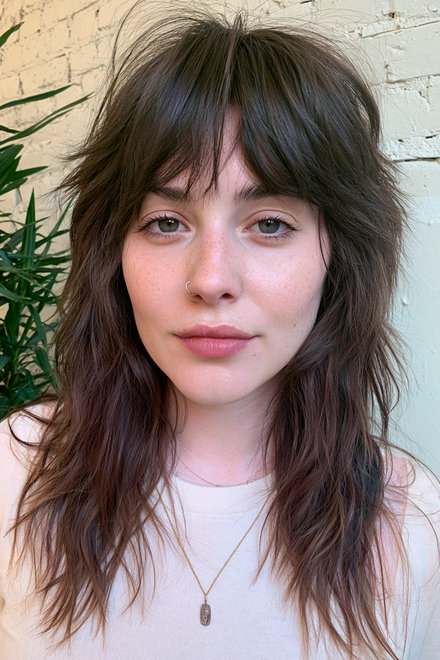
Choppy Shullet with Wispy Fringe

Credit: @bethanysmoker
This dark brunette shullet nails that sweet spot between a shag and a mullet, with choppy layers that give fine hair a serious edge. Razored ends throughout the mid-lengths create separation and movement that fine hair often struggles to achieve on its own. The fringe sits short and slightly jagged, drawing attention to the eyes without overwhelming the face. Loose, undone texture runs through the whole cut rather than looking polished or overdone. Longer pieces at the back keep the shullet shape intact while the choppy top adds volume where it matters most. Anyone after an edgy yet low-maintenance medium cut will find this one genuinely hard to overlook.
Blonde Choppy Shag Before and After
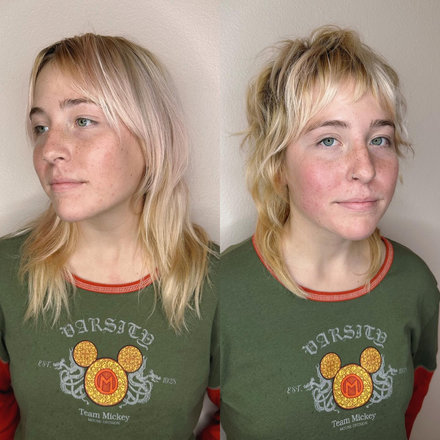
Credit: @marissaloveshair
This before and after shows just how much a choppy shag can transform fine, flat hair. On the left, the hair sits limp and shapeless with little texture or movement. On the right, a choppy medium shag with a short fringe completely changes the picture. Razored layers add separation and volume through the crown, while the fringe gives the whole look a fun, undone personality. Blonde tones catch the light beautifully once the layers are in place, making the colour look richer too. For anyone with fine hair who feels stuck in a style rut, this transformation makes a compelling case for going choppy.
Volume-Boosting Brunette Heavily Layered Shaggy Cut
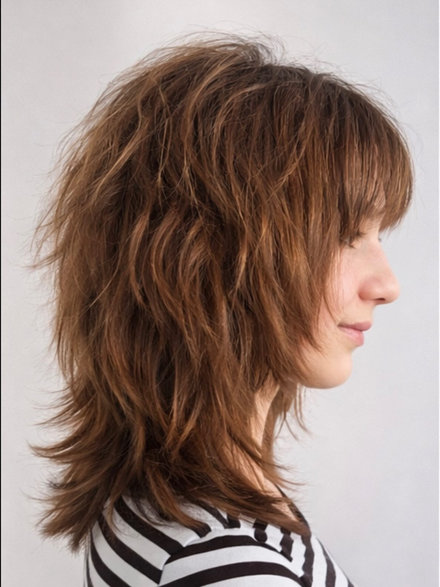
Credit: @kazancevay
Heavy layering and a shaggy silhouette make this brunette cut look full of life from every angle. The crown section is packed with choppy, disconnected layers that fan outward and give serious volume at the top. Each layer is cut with intention, adding texture and separation that makes fine hair look considerably thicker throughout. Curtain fringe falls loosely across the forehead, keeping the look relaxed rather than structured. Movement runs from root to tip thanks to the sheer number of layers working together. Fine-haired women who want maximum texture without relying on hot tools will find this cut genuinely transformative.
Blunt Medium Cut with Choppy Fringe
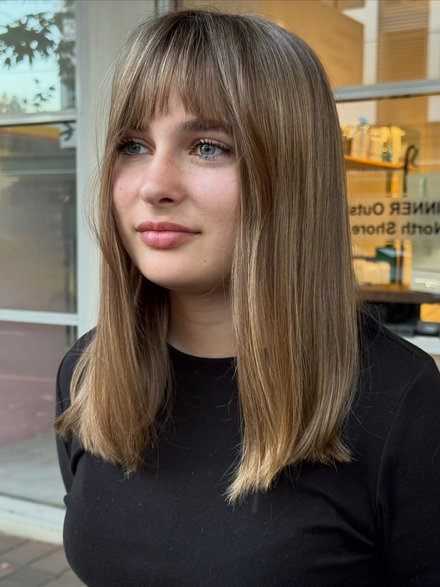
Credit: @letitiaboothhair
This blunt medium cut gets its personality entirely from the fringe. Choppy and slightly undone, it channels Dakota Johnson’s signature effortless style without trying too hard. The lengths themselves are clean and straight, letting the textured fringe do all the talking. That contrast between a blunt cut and a choppy fringe is what makes this look so interesting. Warm brown tones keep the overall colour natural and low-maintenance. Fine-haired women who want a structured shape with a little edge will appreciate how much character a well-placed choppy fringe can bring to an otherwise simple cut.
More ideas below!
Layered Collarbone Cut With Face-Framing Pieces
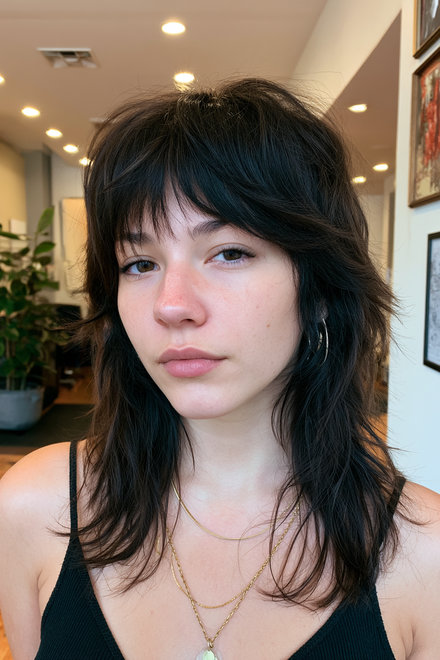
Face-framing pieces are one of the most underused tools for fine hair. When I cut shorter sections around the cheekbones and blend them into the layered mid-length, a few things happen at once. The front sections fall forward and draw the eye upward, which creates the impression of more hair around the face.
The interior layers break up weight distribution so the hair cannot clump flat in the middle. It is a strategic cut that works hard without looking like it is trying. A one-inch wand through the layers working away from the face, then a light dry texture spray and a rough tousle with the hands gives you a relaxed but put-together result every time.
Soft Shag With Micro-Layers
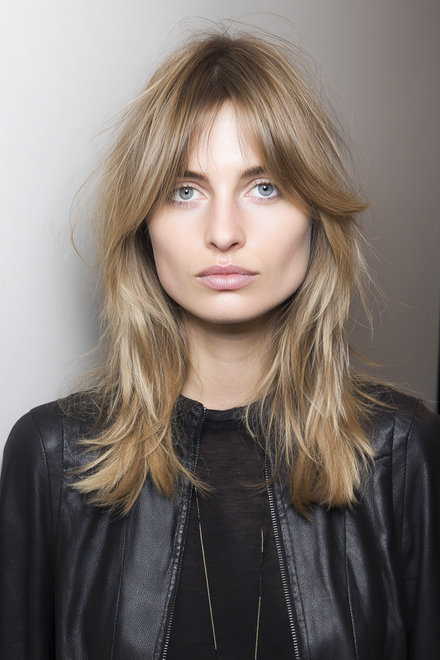
A full shag is great but it is not always right for very fine hair because aggressive layering from roots to ends can leave the bottom looking wispy. The soft shag solves this by using micro-layers only through the crown and upper mid-section while leaving the lower half with more length and weight.
The result is a grounded silhouette that keeps substance at the bottom while building volume exactly where it is most needed, near the roots and through the crown. I blow-dry from the roots down to the mid-shaft first to get lift established, then work the ends with a round brush. A small amount of light mousse through the mid-lengths sets the shape without any stiffness and the cut holds it through the day.
Grown-Out Choppy Fringe With Mid-Length Layers

The fringe grow-out stage is one of the most frustrating things a client can go through and it does not need to be. When the fringe hits somewhere between the eyebrows and the cheekbones I shape it into choppy face-framing layers that connect deliberately into the rest of the mid-length cut. Instead of the awkward in-between length fighting the style, it becomes part of it.
The fringe sections get carved so they flow naturally toward the cheekbones and the choppy layers through the rest of the cut mirror that front texture so everything reads as cohesive. For fine hair the front texture and volume this creates is really significant because that is the first place the eye goes. A small round brush just on the fringe section while blow-drying keeps the layers shaped and takes care of any remaining flatness.
Choppy Wolf Cut
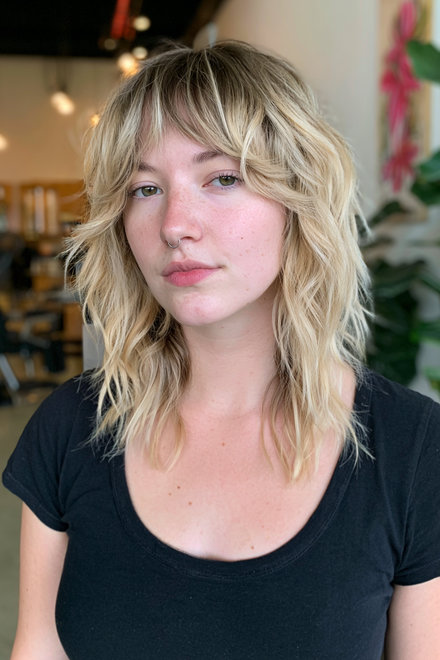
The wolf cut blew up online for a reason. It borrows the heavy crown volume of a shag and the longer perimeter of a mullet shape, and on fine hair that combination is really effective.
What I do differently for fine hair is keep the top layers quite short and direct them to stand away from the head rather than lie onto it. I razor-cut or point-cut throughout to control weight without adding any. The result has real texture but zero heaviness.
A diffuser on medium heat brings out the natural movement, and if there is any wave in the hair at all, a curl cream scrunched through before diffusing makes the whole thing come alive. It actually looks better with a bit of messiness, which makes daily maintenance very simple.
Choppy Medium Shag for Fine Hair With Lots of Layers and Zero Weight
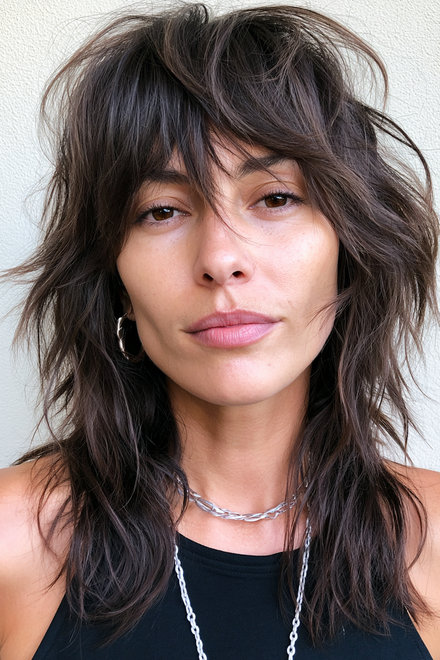
The medium shag on fine hair is all about removing weight at every level rather than just at the ends and that is exactly what the choppy version does. I cut short layers at the crown for lift, medium layers through the sides for movement, and longer choppy layers at the bottom that break up the perimeter into irregular, textured pieces rather than one solid line.
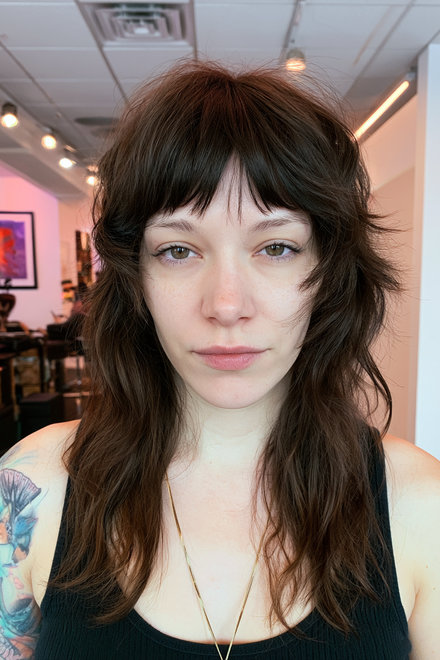
Razor-cutting the ends of each layer lightly adds extra texture and stops the fine strands from lying flat and limp. A sea salt spray on damp hair before diffusing gives the layers the grit and body they need to actually show up on fine hair. This cut genuinely transforms fine hair from something that feels like a limitation into something that looks intentional and full of character.
Choppy Curtain Bang With Layered Mid-Length
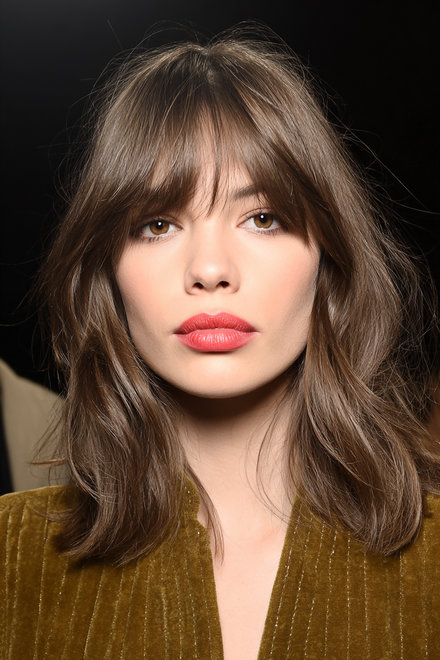
Curtain bangs change the way a face reads and on fine hair they add serious lifting work at the front where flatness tends to be most visible. Combined with choppy mid-length layers the whole style becomes cohesive because the texture of the bangs and the texture of the layers mirror each other.
The bangs part in the center and sweep outward toward the temples, they are low maintenance compared to straight-across bangs and they grow out gracefully too. I always blow-dry the bang sections first with a round brush curving the ends outward, then rough-dry the rest of the layers with my fingers. Texturizing spray at the roots pulls the whole thing together and it reads as effortful in exactly the right way.
The Shaggy Lob With Curtain Bangs
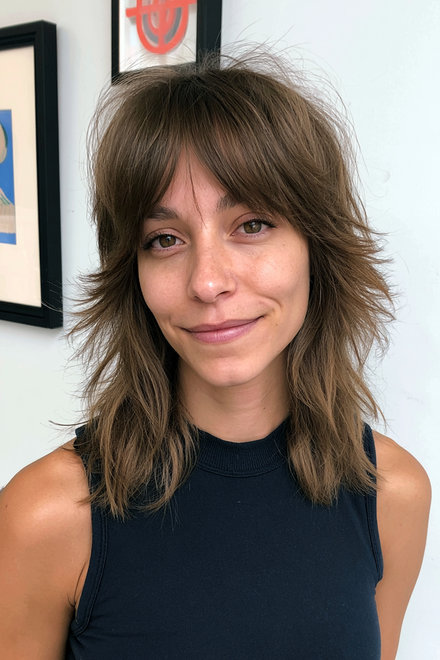
The shag technique is something I have relied on for fine-haired clients since early in my career. Cutting layers at multiple lengths throughout the whole cut stops weight from accumulating in one place, which is the main reason fine hair goes flat.
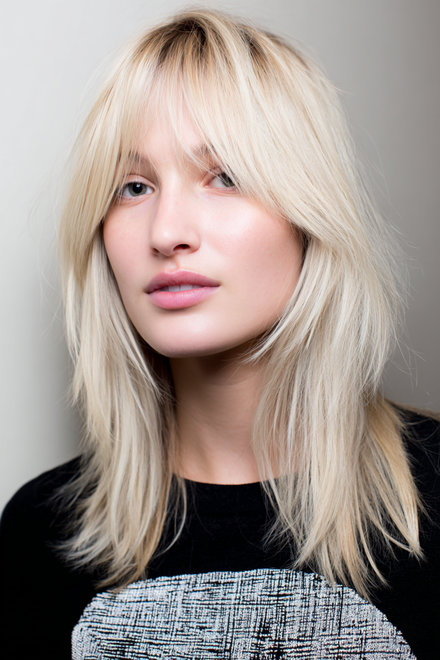
When you add curtain bangs, you get visual mass right at the front where thinness is most visible. I land the length between the collarbone and shoulders and I make sure the bang sections are soft enough to sweep outward without stiffness. For styling, a light-hold mousse on damp hair before blow-drying, then a round brush lifting the roots section by section, gives you the body the cut is built for.
The Choppy Mullet-Inspired Medium Cut
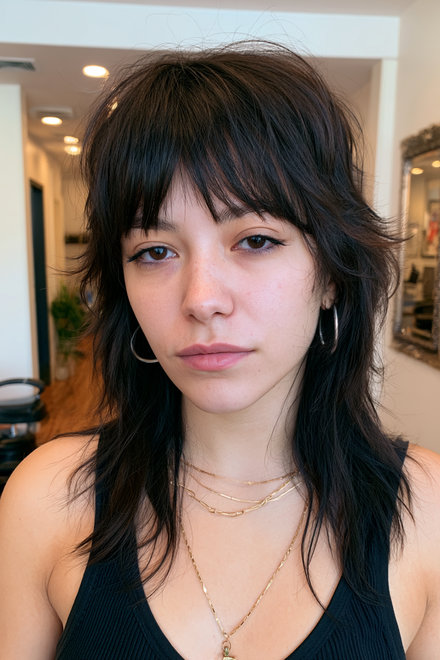
The modern mullet has nothing in common with what most people picture. On medium fine hair it is a layered textured style, shorter stacked layers through the crown, longer curtain pieces at the front, and a back that falls a couple of inches lower than the front sections. The choppy approach through the mid-section creates definition and weight where the silhouette needs it without adding any actual bulk.
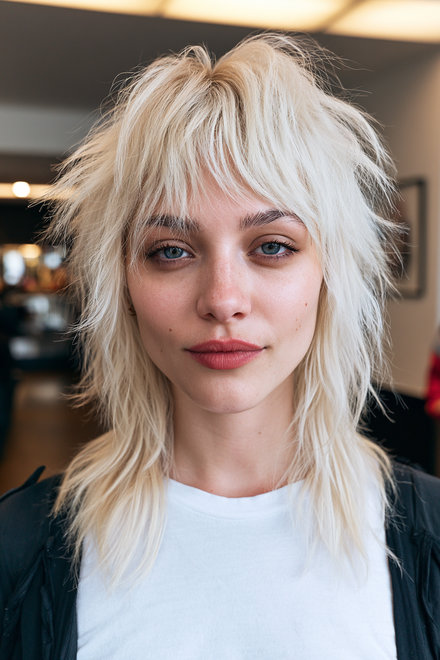
The crown layers solve the flat-top problem that plagues fine hair in other cuts. If there is any wave or texture in the hair at all, a diffuser and curl cream do excellent work here. Straight hair benefits from a small wand through the front curtain pieces to add shape without overworking the rest of the style.
Choppy Lob With Interior Layers
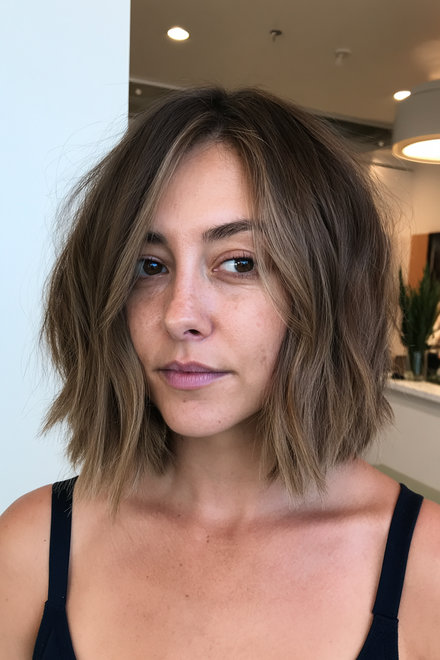
This one looks like a standard blunt lob from the outside, clean perimeter, collarbone length, nothing dramatic. But the interior is where everything happens. I cut stacked layers through the crown and mid-sections that push the hair upward and outward without touching the length.
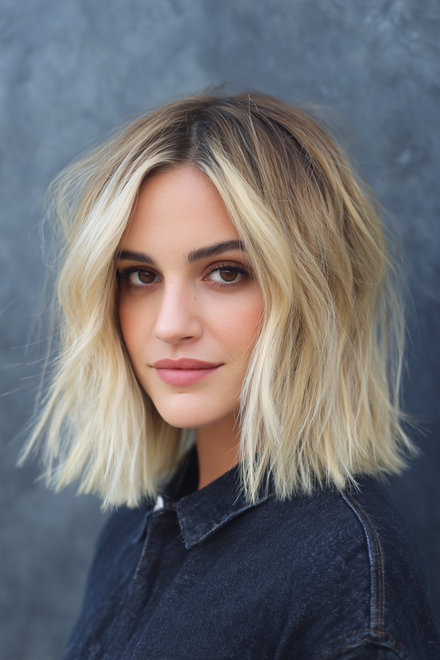
The choppy element is subtle, just light point-cutting along the ends to soften the perimeter line so it does not look stiff. For clients who have spent months growing out their length, this cut is a good option because you keep what you have and the interior layers deliver the volume.
A volumizing foam on damp hair and then a couple of minutes blow-drying upside down sets the shape. Flip back, smooth lightly, and the layers carry it from there.
Feathered Ends Medium Cut
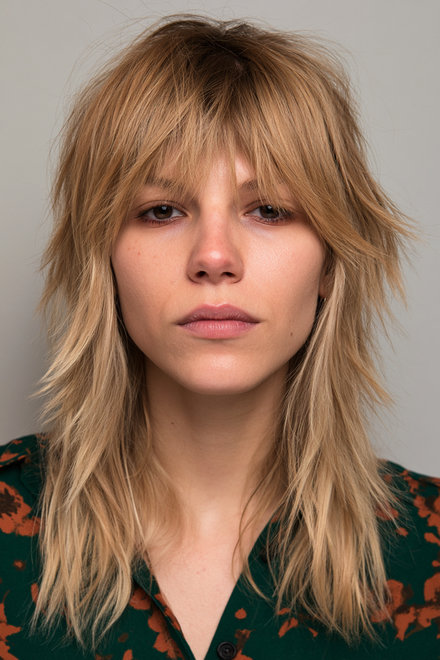
Feathering fell out of fashion for a while but I never stopped using it on fine hair because it solves a real problem. The technique uses a razor or scissors held at an angle to flick the ends outward or inward, and on medium fine hair that creates movement at the perimeter that blunt cutting cannot. The result is airy rather than limp, which is a hard thing to achieve on hair with low density.
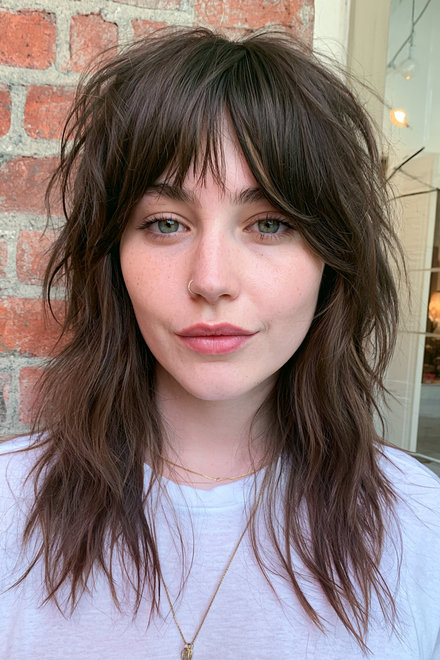
It works especially well on straight fine hair because the feathered ends curve slightly away from the face and add width at the cheekbones and jaw. I always start the feathering at mid-shaft rather than just at the very ends so the effect carries through the whole lower section. Blow-dry with a paddle brush first and then finish the ends with a round brush to coax the outward bend. A little flexible hold spray locks the shape in.
Choppy One-Length Cut With Root Lift
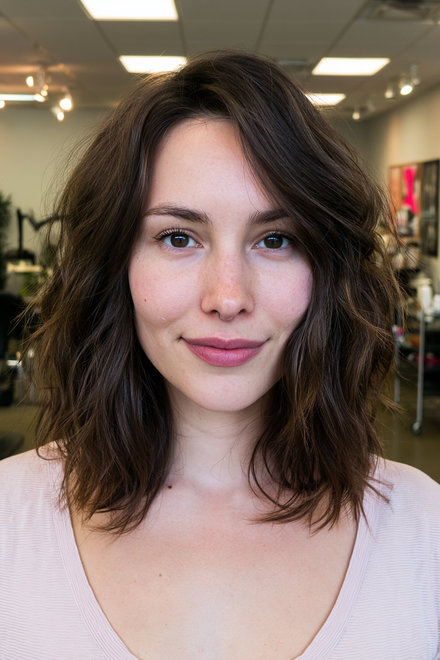
This cut hides everything it does. From the outside it reads as one clean length with no obvious layering. Inside I use channel cutting or slicing through the mid-shaft to hollow out interior weight so the surface can lift rather than sit flat. The choppy element is just at the ends, light point-cutting to create a slightly soft and irregular perimeter line.
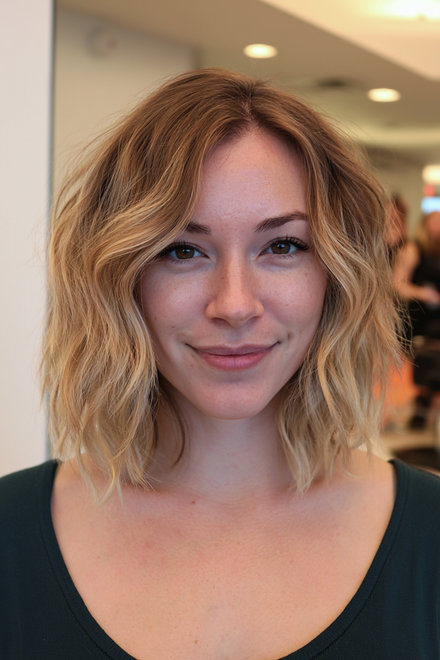
For root lift the technique matters as much as the cut. Blow-dry each section in the opposite direction of where it will lie, and the hair trains itself to stay away from the scalp. Volumizing dry shampoo at the roots, even on clean hair, adds the grip needed to maintain that lift through the whole day. Everything about it reads as effortless thickness.
Disconnected Choppy Layers
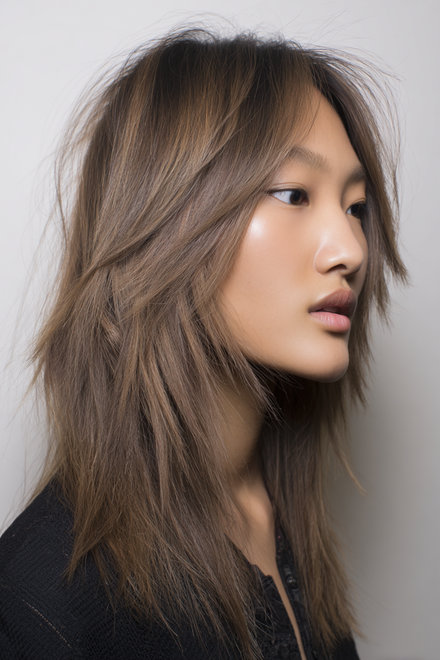
Most stylists blend their layers seamlessly and for most hair types that is the right call. But for fine hair I sometimes do the opposite. Disconnected layering means cutting sections at lengths that do not transition smoothly into each other, short pieces sitting directly next to longer ones with a visible gap between them.
Each layer catches light independently and the eye reads all those different lengths as more hair. The visual density it creates is something blended layers just cannot replicate. I tell clients to be specific when they ask for this, say disconnected not blended and say you want contrast between sections. Sea salt spray on towel-dried hair and then air-drying lets the pieces separate naturally and the texture takes care of itself.
Razor-Cut Layers Mid-Length
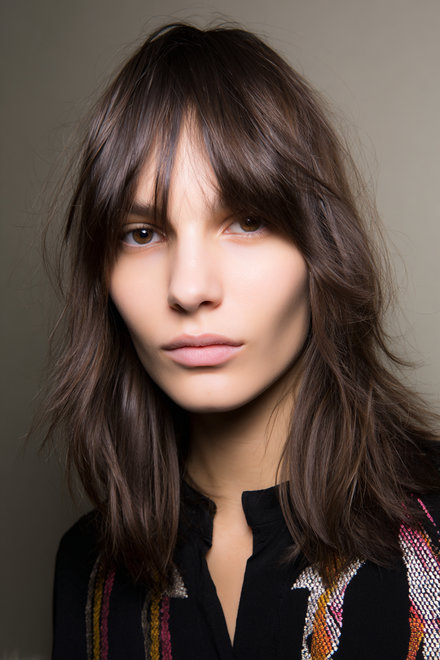
I use a razor on a lot of my fine-haired clients because it does something scissors simply cannot. The blade slices through at an angle and thins each strand at the tip, which removes what I call ghost weight, the subtle heaviness that builds up along the mid-shaft and pulls the hair flat.
The cut sits around the collarbone and I start the layers near the chin and feather them down from there. When you run your fingers through it you feel how genuinely light it is. A volumizing spray before blow-drying and then finishing the last couple of minutes with fingers instead of a brush lets the texture build on its own. It looks like a lot is happening but the technique does all the work.
The Textured Bob With Piece-y Ends
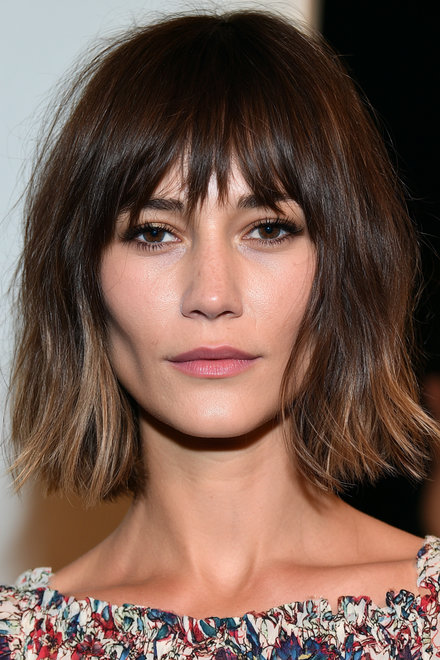
This is one of my most requested cuts and I understand why. Point-cutting through the ends breaks up that blunt line and leaves each piece separated and jagged in the best way. What that does for fine hair is create multiple reflection points along the perimeter so the hair reads as denser than it is.
I always bring the length to the jaw, never shorter for this one, and I carve invisible layers through the interior to support the movement. At home, a small amount of texturizing paste worked through dry hair and then roughed up with your fingers is all you need. The piece-y ends do the rest and the style holds most of the day without much fuss.
Bixie Cut With Choppy Crown
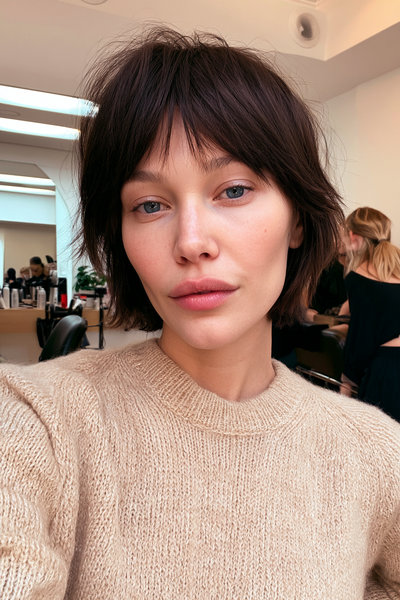
The bixie sits between the chin and the ears, shorter than a bob but not fully committed to a pixie. Where it gets interesting for fine hair is in the crown work. I go aggressive with layering through the top, disconnected rather than gradual, so the sections at the crown lift and separate instead of lying flat.
The sides and back I clean up shorter, which pushes even more attention to the volume above. It creates an almost sculptural shape that fine hair does not usually get to have.
Styling is straightforward, texturizing spray while damp, air-dry, then a tiny amount of matte clay through the top to define the pieces. It looks effortless because the structure is built into the cut itself.
Undone Waves on a Choppy Lob
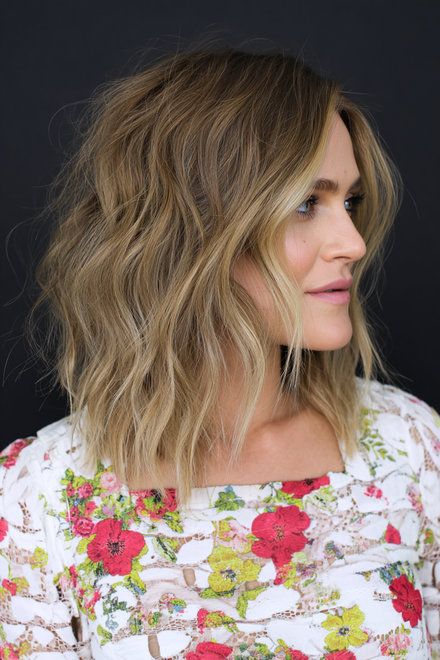
Getting beachy volume on fine hair is mostly about the order of operations. The mistake most people make is trying to add waves to flat hair. I always tell clients to apply volumizing mousse before blow-drying straight first, so the waves go onto hair that already has body in it.
Then use a one and a quarter inch curling iron and wrap sections loosely and inconsistently, some tighter, some barely touching the barrel, and break them apart with your fingers before they cool fully. The choppy ends on the lob stop the result from looking polished or overdone. A light-hold texturizing spray after breaking the waves up adds just enough grip. The goal is not neat beach waves. It is movement that looks like twice the hair.
Textured Asymmetrical Bob
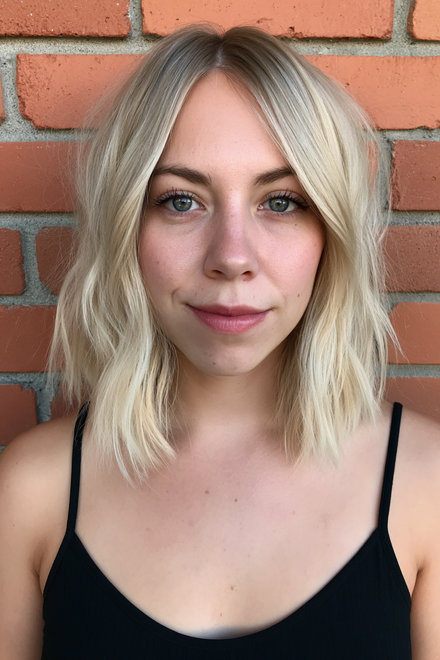
I love doing asymmetrical bobs on fine hair because the shorter side creates an immediate illusion of fullness right where it sits against the head. The longer side adds movement and length and the two together give the style real visual interest. The choppy version adds irregular texture throughout so the whole thing reads as artistic rather than just geometric.
Without that texture, asymmetry on fine hair can look flat on the longer side. I always aim for at least one inch of difference between the two sides, anything less looks like a mistake rather than a choice. Rough-dry with a diffuser or hands and then use a small flat iron to add slight bends in alternating directions on each side. The asymmetry carries the whole look.
Stacked Back Bob With Choppy Top
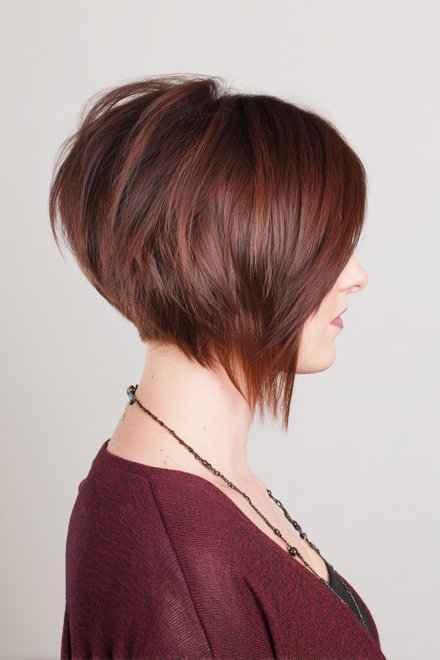
Stacking is one of the most reliable volume techniques I use for fine hair. Shorter layers at the back and nape physically lift the hair sitting above them, and when you combine that with disconnected layering through the crown and point-cutting through the front sections you get a bob that has both structure and edge.
The choppy top prevents it from looking too neat or too dated. I style the back sections with a volumizing mousse and a boar bristle brush for grip and smoothness, then let the front sections air-dry. The contrast in texture between the two areas is deliberate and it adds to the overall effect rather than looking unfinished. Fine hair responds to stacking better than almost any other technique I know.
The Lived-In French Bob
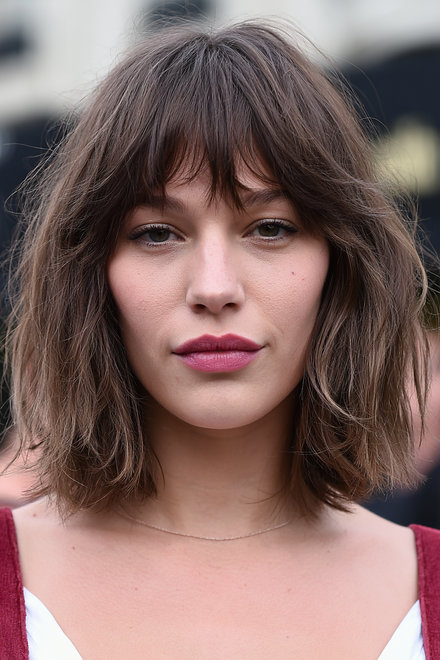
The French bob thrives on imperfection and that is exactly why it works so well on fine hair. I do not cut a hard blunt line on this one. Instead I texturize the perimeter so the ends look slightly undone, settled, like the hair has found its own shape.
Shorter lengths mean less weight dragging everything down, and the choppy edge creates visual width at the jaw that balances fine hair beautifully. Styling it at home is simple, a small ceramic flat iron with sections bent slightly rather than pressed flat, then a flexible wax or piecey pomade to separate the ends. The goal is hair that looks like it styled itself and the French bob is very good at that.
Choppy With Face-Framing Layers for Fine Straight Hair
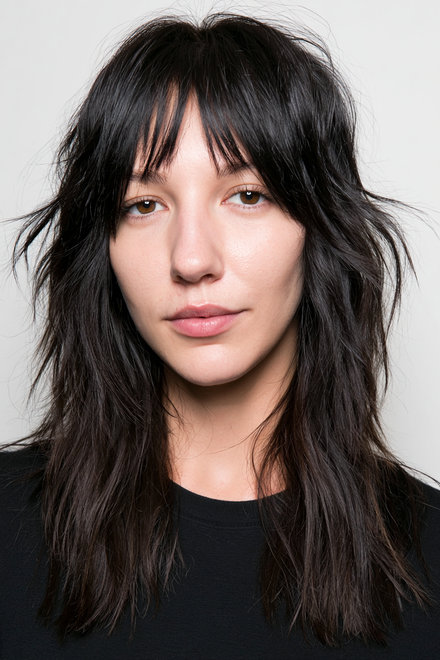
Fine straight hair and choppy layers are a combination that requires confidence from the stylist and I always say that when I explain why so many fine-haired clients end up with safe, uninspiring cuts.
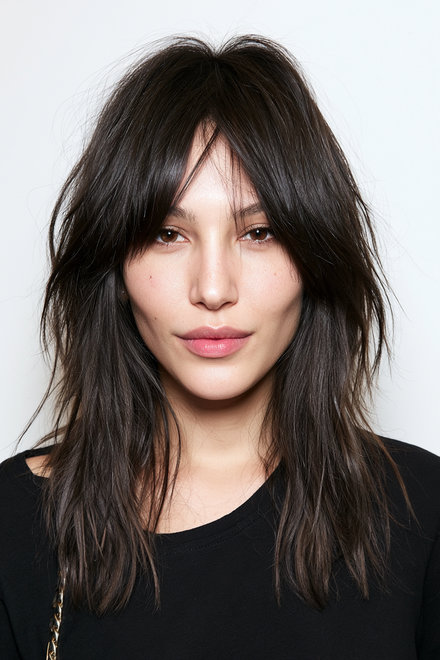
The choppy layers need to be cut with real conviction so they read as deliberate rather than accidentally uneven. I cut face-framing pieces that start around the chin and graduate back into the longer choppy layers behind, giving the straight fine hair both direction and movement it would never have in a one-length cut. A flat iron through the face-framing pieces with a slight outward flick at the ends activates the choppy layers and makes the whole style look editorial.
On fine straight hair the choppiness is the entire personality of the cut and toning it down defeats the purpose.
Choppy Side-Part Bob
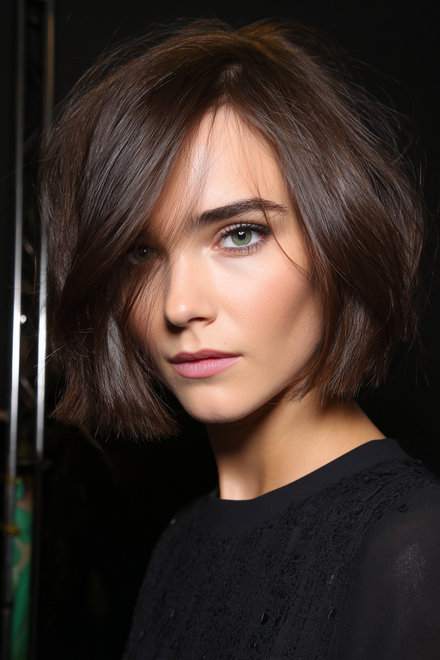
A deep side part is one of the simplest volume tricks there is and not enough people use it intentionally. When you push fine hair against its natural direction of fall it lifts away from the scalp on its own. On a chin-length bob with choppy interior layers and slightly razored ends, that lift gets amplified by the cut itself. I make one side slightly heavier than the other to reinforce the asymmetry of the part.
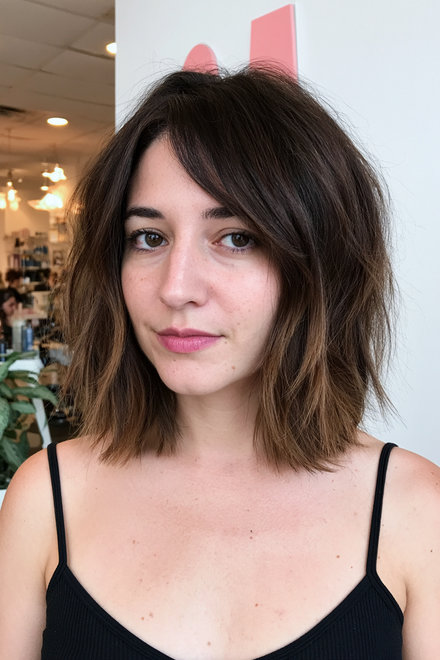
The choppy layers add dimension and movement that a plain bob simply does not have. For styling I always blow-dry against the part first, then sweep everything to the correct side. The hair has built-in resistance from the misdirection and that is what creates the volume. Texturizing spray through the roots after locks in the lift and keeps the part looking intentional.